
The Reformation Was a Catastrophe: Why Luther’s Revolt Fractured the True Church
11 July, 2026 · Sebastian Moniz
The Protestant Reformation perfectly highlights how human beings should never place their own reason above Sacred Tradition, because when humans try to liberate religion, they inadvertently drift further away from God. As a practicing Catholic, who goes to Latin Mass, I am incredibly fortunate that the reformation did not take away the beauty of Roman Catholic culture in my church, as it did to most other churches across the UK. Luther completely rejected 15 centuries of theological development, preserved scripture, religious unity and sacred liturgy by putting forward the totally contradictory ideas of Sola Fide and Sola Scriptura. Despite getting some things right, the Reformation secularised most of Europe by destroying Roman Christendom, as well as the theological and cultural aspects of the Roman Catholic Church. It was not a liberation – it was a demolition of everything I love about the Catholic faith. What Luther called freedom, I call the greatest loss in Christian history.
What The Reformers Actually Claimed
The doctrine of Sola Scriptura (Scripture Alone) was clearly stated by Martin Luther in The Diet of Worms (April 1521), which was made as Luther was being pressured to retract his writings by the Holy Roman Emperor. In the following passage from The Diet of Worms, he states that he will remain entirely loyal to the scriptures (God’s Word) rather than blindly obeying corrupt institutions and papal authority, highlighting his belief that the entirety of God’s message is in the Bible, leaving no room for magisterial teachings:
“Unless I am convinced by the testimony of the scriptures or by clear reason (for I do not trust either in the pope or in councils alone, since it is well known that they have often erred and contradicted themselves), I am bound by the scriptures I have quoted and my conscience is captive to the word of God. I cannot and I will not retract anything, since it is neither safe nor right to go against conscience.1“
Luther’s belief in Sola Fide (Faith Alone) was shown in his German translation of Romans 3:28, where he added the word “alone” (allein) to show that eternal salvation can only be achieved by trusting in Christ’s sacrifice, not by performing religious works. The most infamous and corrupt example of these works are indulgences, which was when people gave money to the Church to literally buy a loved one’s way out of purgatory. The small change in the Bible passage made it seem like he had biblical support for his claims.
Romans 3:28: “Man is justified by faith alone apart from the deeds of the law.”
His rejection of the seven sacraments down to two was put forward in On the Babylonian Captivity of the Church (1520). He accused papal authority of trapping the church in sin by presenting human interventions and actions as sacraments. He only recognised the sacraments of Holy Communion and Baptism as they have visible signs of the forgiveness of signs established by Christ.
“There are, properly speaking, only two sacraments in the Church of God: Baptism and the Bread [the Lord’s Supper]; for in both of these we see instituted a sign and a promise of the remission of sins.2“
In 1524 Luther composed the Smalcald Articles, where he outlines his Christian beliefs. Most notably, he outlined his rejection of papal authority as he frames Pope Leo X as a corrupt, redundant, traitor of Christ because he believed that the Church placed human orders over God’s word.
“Besides, as often remarked, it is a human figment which is not commanded, and is unnecessary and useless; for the holy Christian [or catholic] Church can exist very well without such a head, and it would certainly have remained better [purer, and its career would have been more prosperous] if such a head had not been raised up by the devil.3“
The Church Was Already Reforming
I think that most people’s argument for the Reformation is that the Roman Catholic Church was extremely corrupt throughout the 16th century, because of indulgences, nepotism, deception etc. However, there were already internal reformers within the Church. The Rule of St Francis of Assisi criticised large institutions for property ownership, which was a direct attack on the Church as it was becoming more powerful and wealthy. Moreover, Franciscan friars voluntarily became beggars from 1209 onwards, which showed that they relied on God rather than the wealth of the Church. This example of inner turmoil and protest reveals how the necessary changes in the Church would have been slowly implemented over time. Luther had abandoned the house before it had been renovated.
Another example is the Council of Trent (1545-1563), which successfully addressed the obvious corruption of the Church only 28 years after Luther drafted his 95 Theses. The Council banned the selling of indulgences, stopped nepotism (when popes and bishops awarded high Church positions to their relatives) and forced every diocese to establish seminaries, which was where future priests were educated, thus preventing uneducated, incompetent priests taking power. While some people may say that the Reformation simply sparked this desperate response, I believe it shows that the Roman Catholic Church was completely capable of making change regardless of whether the Reformation happened or not. Without the Reformation these changes might have not happened this quickly, however I think that internal conflict within the Church would gradually create these changes. Naturally, gradual changes would have been far better for the Church than the catastrophic, radical Reformation.
The Theological Catastrophe
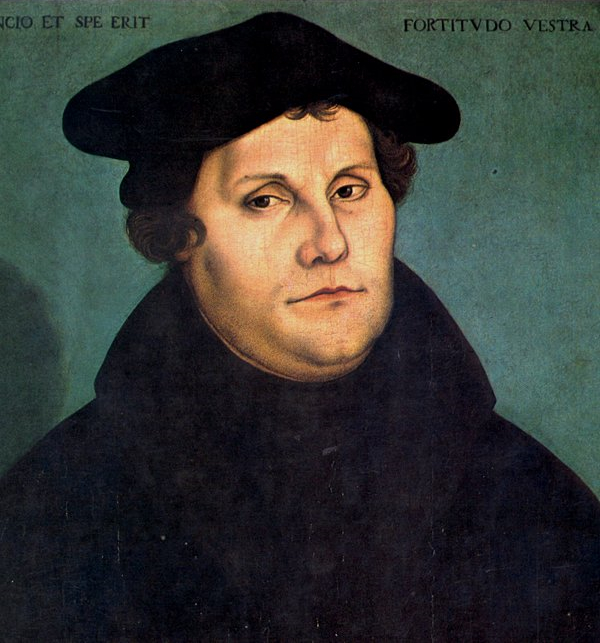
The phrase Sola Scriptura (Scripture Alone) undermines the entire Reformation. At the Council of Carthage between the third and sixth centuries, the Bible was canonised as the Church formally confirmed the 27 books in the New Testament and 46 books in the Old Testament. If a fallible Church created the Catholic Bible (which was very closely related to Luther’s Bible), is it not correct to assume that the Bible is also fallible, thus it should not be treated as the ultimate, infallible authority? In contrast, if the Bible is infallible, shouldn’t the Church also be seen as infallible? Consequently, the elimination of a central body of authority like the Church led to many disagreements and schisms within Protestantism, because there was no unified interpretation of Scripture. Within 500 years we have gone from one Church to potentially over 30,0004 Protestant denominations. St Paul warned us about this lack of unity:
1 Corinthians 1:10: “I appeal to you, brothers and sisters, in the name of our Lord Jesus Christ, that all of you agree with one another in what you say and that there be no divisions among you, but that you be perfectly united in mind and thought.”
The Catholic Church is simply a divine institution implemented by God run by regular, fallible people. The survival of its monolithic biblical teachings despite so much corruption in the 16th century is, in my opinion, evidence of divine intervention. Everyone was unified under one, correct biblical interpretation, but the Reformation destroyed that.
Sola Fide (Faith Alone) is, in my opinion, just an overreaction to the corruption of the Roman Catholic Church in the 16th century. This doctrine forcefully separates belief in God from action. Even demons possess belief in God and Jesus Christ, but what separates them from us is that we should be willing to take action, which allows God to guide us towards eternal salvation. For example, we can confess our sins to God at church, which restores our relationship with God. Faith must be accompanied by willingness to take action, or else we are just beating hearts with no blood to pump. Furthermore, the Bible explicitly tells us exactly this:
James 2:24:”You see that a person is justified by works and not by faith alone.”
Luther rejected all of the sacraments other than Baptism and Holy Communion, because they have visible signs established by Christ according to him. However, as Catholics we argue that since God (a divine being) became flesh (physical matter) through the incarnation, he offers the gift of grace through physical matter rather than spiritually, which is what sacraments are. While Christ did not establish every single sacrament specifically, he established the spiritual power behind each sacrament, which the Church then develops into visible forms. For example, in the following passage Jesus does not directly command us to perform the Anointing of the Sick, but he expressly dictates it to the sick , along with the promise of forgiveness:
James 5:14-15: “Is anyone among you sick? He should summon the presbyters of the church, and they should pray over him and anoint [him] with oil in the name of the Lord. The prayer of faith will save the sick person, and the Lord will raise him up. If he has committed any sins, he will be forgiven.”
The next passage clearly describes the laying on of hands and the passing down of the Holy Spirit to people after Baptism, which is exactly what happens during Confirmation as our faith is strengthened:
Acts 8:14-17: “Now when the apostles in Jerusalem heard that Samaria had accepted the word of God, they sent them Peter and John, who went down and prayed for them, that they might receive the holy Spirit, for it had not yet fallen upon any of them; they had only been baptized in the name of the Lord Jesus. Then they laid hands on them and they received the holy Spirit.”
Luther’s rejection of papal authority was him practically digging his own grave, as without a central figure to resolve theological disputes about scripture, Protestantism started to fracture. Christ’s Church on earth needs someone to create unity on our journey to salvation, and that someone is the pope. As well as this rather pragmatic reason for having pope, there is also biblical evidence for this claim:
Matthew 16:18: “And I tell you that you are Peter, and on this rock I will build my church, and the gates of Hades will not overcome it.”
Luther and Protestants interpret this passage as Jesus not building his Church on Peter, but rather Peter’s faith in Jesus as Christ, thus undermining papal authority (Peter is considered the first pope by Roman Catholics). We argue that both “Peter” and the “rock” are both the Aramaic word Kephas, which was the name given to Simon. Therefore, this passage directly identifies Peter as the foundation of the Church, which justifies papal authority because Jesus spoke Aramaic.
The Cultural Catastrophe
The Reformation systematically destroyed centuries of elegance and beauty in worship, as well as the entire infrastructure of Christian civilisation.
In 1538, Henry VIII destroyed the spectacular shrine of St Thomas Becket, who was a revered martyr. The shrine was made of gold and jewels, and it was a famous pilgrimage site before the Reformation. Becket died to protect the Church from the crown, which went on to eradicate his legacy so no one remembered why. The magnificent shrine was a symbol of Christian martyrdom, centuries of Sacred Tradition, the beauty of Christian worship and miracles. The king had no right to destroy the spiritual heart of English Christendom for revenge and theft. What followed in the 1540s under Edward VI was the systematic obliteration of images in every parish church across England, which was called iconoclasm. No new form of art was introduced. No new, exquisite form of worship was introduced. It was just a removal of everything that was already there. Centuries of stained glass windows and statues that villages had saved up for and grew up with were gone. Yet England was just a microcosm for the whole of Europe. Nothing can justify destroying in a decade what 15 centuries of faith had built.
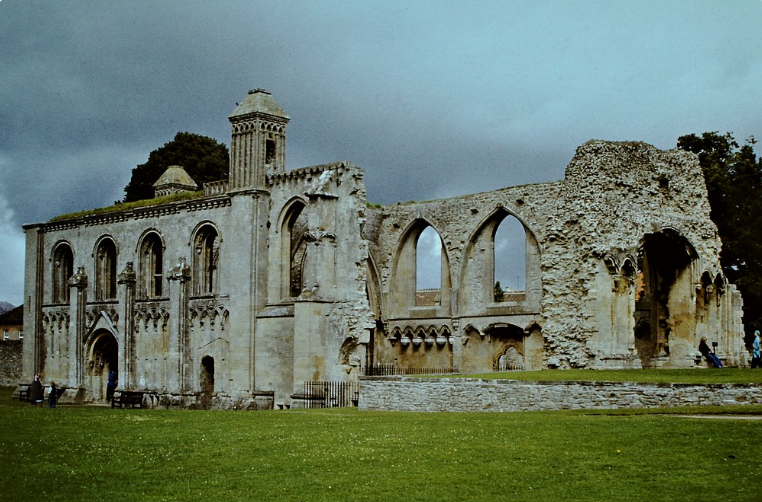
Between 1536 and 1541 Henry VIII dissolved over 8005 monasteries. My best example of this is Glastonbury Abbey, because of one man whose name was Richard Whiting. He was the last Abbot of Glastonbury and a heroic martyr, because when Henry VIII’s officials arrived to dissolve Glastonbury in 1539 he refused to surrender it to them. Whiting wasn’t corrupt or wealthy, he was just a holy man dedicated to following his vows, and a perfect symbol of all the innocent monks and nuns displaced in this time period by Henry VIII. Most people also don’t know that monasteries were hospitals, schools, and places where food was distributed in rural areas. Thus the dissolution removed the entire social infrastructure of rural England. Monastic libraries contained invaluable texts, such as classical literature, Bibles, Gospels, sermons and writings by The Early Church Fathers. John Leland, who was the antiquary (collector of old things) of Henry VIII, reportedly suffered a mental breakdown in London after witnessing the destruction of rare, ancient manuscripts in monastic libraries. Even the assistant of the king himself couldn’t suppress his feelings about the importance and magnitude of this destruction.
The Latin liturgy and language was completely erased from most Protestant churches in the 16th century. As someone who attends Latin Mass every Sunday at St Thomas More Catholic church, I think that Latin is the best language to use at mass. It unites everyone through Roman culture. It is highly concise and beautiful. It perfectly reflects God’s glory through its enigmatic nature, making it a sacred language in my opinion. My favourite part of mass is the credo sung by the wonderful choir. The argument that Latin Mass is harder to understand than Vernacular Mass is total nonsense, because over time you start to replace the words you know from the mass in your own language with the Latin, and I have experienced this first-hand. However, in Protestant churches they are not fortunate enough to have this luxury, because of a never-ending grudge against the Roman Catholic Church. Unfortunately, most churches today do not offer Latin Mass, which I believe is a devastating but overlooked cultural impact of the Reformation.
What The Reformers Got Right
I am absolutely not trying to take away from the fact that the Church was indefensibly corrupt in the 16th century. Through indulgences people literally purchased a loved one’s way out of purgatory into heaven. Luther was right to be outraged, because God (being transcendent) does not care about material possessions. Thus if a person lived a terrible life they cannot buy their way out of eternal punishment. It was a shameless way for the Church to gain money and power. Johan Tetzel was the chief seller of indulgences and he famously always said:
“When the gold in the casket rings, the rescued soul toward heaven springs.6“
Another example of blatant corruption was papal nepotism, which was when popes and bishops awarded authoritative positions to relatives to consolidate power. This meant that more qualified and talented clergymen were ignored, sending the Church into a spiral of spiritual incompetence. Pope Alexander VI took papal nepotism to extreme heights, with his most famous example being when he made his teenage son (Cesar Borgia) a cardinal.
Although Luther was right to attack the Church for their total hypocrisy, the solution he gave to this was catastrophically wrong. The Reformation drove people further away from God, because it was far too radical. Instead, Luther should have waited for the internal opposition in the Church to grow and create gradual reforms through Church councils.
Luther had an itchy hand. He could have scratched it or put cream on it, but instead he chopped the hand off.
The Legacy
To put it simply, the Reformation completely destroyed the unification of Europe under one Church, as well as the cultural and theological foundation of Christian civilisation. This has inevitably led to the secularisation of countries highly impacted by the Reformation. This is particularly shown in Scandinavia, in which the Reformation took place in full effect. Sweden, Norway, Finland and Denmark are considered the least religious countries in the world. In Denmark, 82%7 of the population are members of the Lutheran Church. However, weekly church attendance is only at 4%8, which is quite frankly appalling. Does anyone truly believe that the Reformation brought people closer to God?
To hammer this point home, I want to mention again that there could be over 30,0004 Protestant denominations today. This is an inevitable consequence of Sola Scriptura (Scripture Alone), because everyone has their own interpretation of the Bible, which leads to several schisms and fractures. If Christianity is constantly divided into thousands of groups all claiming that they know the divine truth, Christianity means nothing. To an outside observer the most logical response is to reject them all, thus Sola Scriptura leads to atheism.
The Catholic Church was Rome’s gift to Western civilisation. Roman unity, Roman culture, Roman language and Roman order were all inherited by the Catholic Church, which preserved all of these things. Latin was used at every mass, uniting all people in Christendom. The Pope succeeded the Emperor, bringing Roman order for 15 centuries. The Reformation fractured these foundations we inherited from Rome, thus eradicating the authority and unity of the Church.
Conclusion
I am not a Catholic apologist and I do not have an agenda against Protestantism, but I wholly believe in the theological and cultural disaster that the Reformation absolutely was. When I sit in mass and listen to the Sanctus sung by the brilliant choir, I forget all my problems for a moment, and I wonder what I would do If the Reformation laid its hands on my church. The Reformation engulfed the world with totally contradictory theological ideas, which led so many countries down an atheistic path. Luther eradicated everything good about the Church, instead of waiting for internal reform to take place naturally. It was not reform, it was the demolition of the foundation of society.
But I hope that this 500-year-old catastrophe can be undone through the grace of the Holy Spirit, and that the one, holy, catholic and apostolic Church built on a Roman rock will be restored once and for all.
I hope you enjoyed this article. If you have any questions or thoughts on the article, let me know by leaving a comment below.
References
1. Joshua M. (2021). “Luther’s Speech at the Diet of Worms” Luther’s speech article, World History Encyclopedia
2. Carl B. Henry W. (1883). “First Principles of the Reformation (1883)” 1883 collection of Luther’s major works, The Online Library of Liberty
3. LCMS. (2000). “Article IV: Of the Papacy” The Smalcald Articles Part II, Book of Concord
4. David B. (2001). “Table 2: Global Datasets” Data on Christianity, World Christian Encyclopedia
5. Michael C. (2021). “What Became of the Monks and Nuns at the Dissolution?” Dissolution of the monasteries, English Heritage
6. Joshua M. (2022). “Johann Tetzel” Article about Johann Tetzel, World History Encylopedia
7 and 8. ARDA. (1997). “National / Regional Profiles” Religious demographics in Denmark, Northern Europe and the world, The Association of Religion Data Archives