
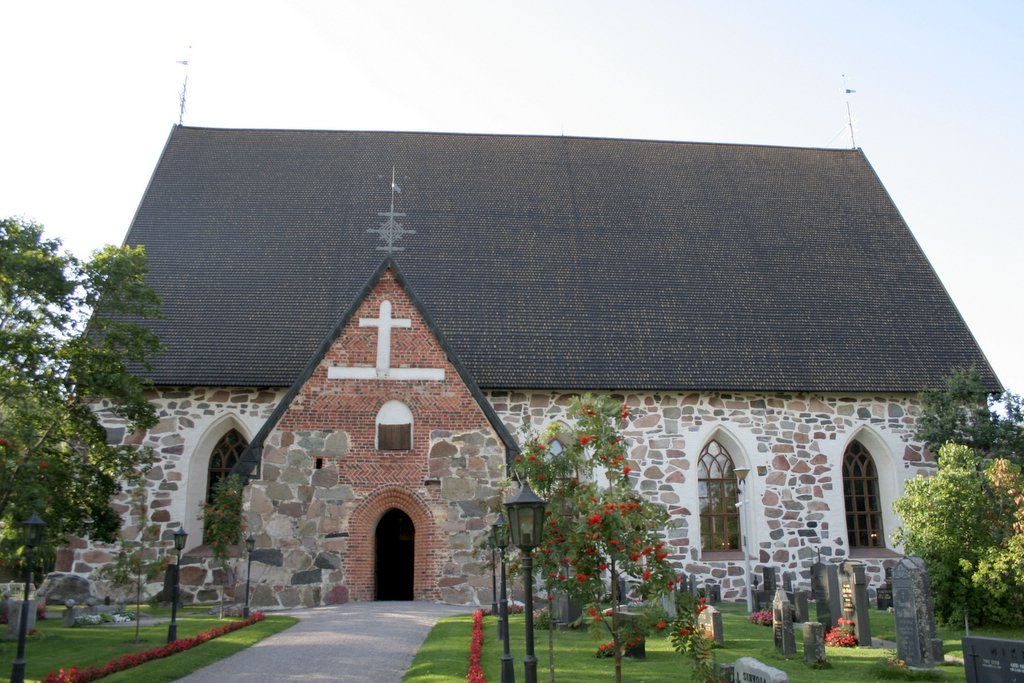
Why Gregorian Chants Remain the Purest Form of Catholic Worship Music
by Sebastian Moniz
Fortifying, beautifying, and igniting our Roman Catholic faith, Gregorian chants transform Catholic worship. I advise each and every one of you to go to your local church or chapel to listen to the Salve regina or Adoremus in aeternum (which you can listen to during the Benediction of the Blessed Sacrament). Even excluding the fact that they were written in Latin (the best language for Catholic worship music because it is so enigmatic and concise), there are three main reasons for me that Gregorian chants are superior to any other form of song. It was designed specifically for prayer, not for a grand musical performance, giving it spiritual efficacy. Its mathematical structure also made it perfect for reverberation, emotional variation, and a free-flowing rhythm. Finally, Gregorian chants have extremely deep roots in the early Church, making it extremely authentic and traditional, which, in my opinion, strengthens our connection to the Roman Catholic faith. Unlike accompanied forms of music, which could distract people from focusing on God, Gregorian chants fit all the criteria for true worship music.
What Worship Music Is Actually For
I believe there are three main things that Catholic worship music should do:
. Elevate our minds towards God – praising and glorifying God should be the entire focus of worship music. The lyrics and performance should not be secularised to fit modern pop culture, as this sways people’s attention away from God. The quote below from Tra le Sollecitudini (a document issued by Pope St. Pius X) outlines how sacred music must be holy and liturgically accurate (meaning that it is unsecularised and exemplifies the specific and truthful actions of God, removing all distractions) and it criticises profane worship music.
Tra le Sollecitudini, Chapter I, Paragraph 2: “Sacred music should consequently possess, in the highest degree, the qualities proper to the liturgy, and in particular sanctity and goodness of form, which will spontaneously give rise to the other quality of universality, that is, true holiness… It must be holy, and must, therefore, exclude all profanity not only in itself, but in the manner in which it is presented by those who execute it.1“
. Unite all people in the congregation – Roman Catholic worship music must connect all people to the roots of our faith, which unites us in prayer. This reference from Sacrosanctum Concilium highly values sacred musical tradition, because it ties modern Catholics to the early Church, which creates religious unity:
Sacrosanctum Concilium, Chapter VI, Paragraph 112: “The musical tradition of the universal Church is a treasure of inestimable value… the more holy in proportion as it is more closely connected with the liturgical action, whether it adds delight to prayer, fosters unity of minds, or confers greater solemnity upon the sacred rites.2”
. Must be well-crafted and elegant – since the music is being offered to God, it must be genuinely beautiful with excellent composition to successfully glorify God and associate him with attributes of goodness, joy and beauty. In the reference below from Musicae Sacrae Disciplina (Pope Pius XII’s Encyclical), beautiful and magnificent worship music is aggressively commended for bringing joy to Catholics and reflecting God’s grace, whereas sloppy music is rejected.
Musicae Sacrae Disciplina, Chapter III, Paragraph 23: “Furthermore, this music must possess those qualities which are proper to genuine art. If it is not a true art, it cannot have that power and efficacy which the Church desires her liturgical music to possess. However, this art must be truly beautiful and magnificent, if it is to be a worthy offering to God and a source of spiritual profit to the faithful. Hence, the artist who has a deep faith and leads a life worthy of a Christian… will try to express the divine goodness, power, and majesty in his music. His art will reflect the splendor and beauty of God, and it will be a source of inspiration and joy to the Christian people.3“
A Fair Concession to Traditional Hymns
My absolute favourite traditional hymn is Holy God, We Praise Thy Name, because whenever I listen to it always reminds me to appreciate the wonder of the universe and the power of our Lord. I really like how it was sung in the Midnight Mass series (on Netflix) right before the Easter Vigil Mass, despite the fact that I wasn’t fond of the series itself. All traditional hymns are genuinely well-crafted, beautiful and poetic, which is all brought about by the four-part vocal harmony (Soprano, Alto, Tenor, Bass), liturgical accuracy, and the magnificence of the pipe organ (which I am about to start learning because I think it combines all instruments into one). However, Gregorian chants completely fulfil each criteria for worship music perfectly, whereas traditional hymns only satisfy them. This will be explained later in the article.
The Music That Moves the Soul
Gregorian chants were not made for a grand musical performance, they were made for prayer. They do not have a strict beat, rather they follow the natural rhythm of the Latin words, which means that the rhythm completely sticks to every word. Additionally, Gregorian chants are unaccompanied (so no musical instruments are playing alongside the lyrics). Both of these factors completely ensure that we are not distracted by musical show or a catchy rhythm, but instead we entirely focus on the meaning of the lyrics themselves, which lifts our soul to God.
Where I went to school we used to have chapel every other Wednesday and I was fortunate enough to listen to a Gregorian chant sung by the choir on those days. It was either Adoremus in aeternum, Salve regina or Alma Redemptoris Mater. The music was so enigmatic and beautiful every time I heard it, despite the fact that there was no organ or an attractive rhythm. I could just say that this was because they were written in Latin, however I know that there is something else about them that creates this atmosphere, although I can’t fully pinpoint what it is. Moreover, I felt a sense of passion and pride in my faith, which I think was because I focused more on what the lyrics meant, which gave me a more profound understanding of what our Lord had done for us. I believe that all of this is the intended effect of a Gregorian chant.
The Mathematics of the Divine
Gregorian chants use eight modes (church modes), which are just different ways that musical notes are arranged to create a scale with a specific mood or atmosphere. It is important to note that while the white keys on a piano can be used to explain and mimic the emotion and range of these modes below, they are only a visual shortcut. Gregorian chants were only sung (not played on an instrument) and you can’t represent a free-flowing voice with fixed piano keys. However, I will use them to simply explain the modes below:
. Dorian mode – starts on D and goes up to D. It creates a serious and almost imperial atmosphere and is often seen as the perfect balance between happiness and sadness.
. Phrygian mode – starts on E and goes up to E. It is often used with lyrics about grief or sorrow, because it conveys extreme sorrow, mournfulness and intensity.
. Lydian mode – starts on F and goes up to F. Celebratory events are usually when this mode is used because it is joyful and triumphant.
. Mixolydian mode – starts on G and goes up to G. It removes your mind from earthly anxieties with its constant gentle and reassuring tone, which lifts your mind to the glory in heaven.
I hope this shows you the wide range of emotional vocabulary that the monks and nuns who made the chants had to work with. Each mode creates specific emotional responses suited to the topic of the music, which is likely one of the reasons why people like myself who listen to Gregorian chants have such deep and complex emotional responses. I think this definitely contributes to them being the most well-crafted form of Roman Catholic worship music.
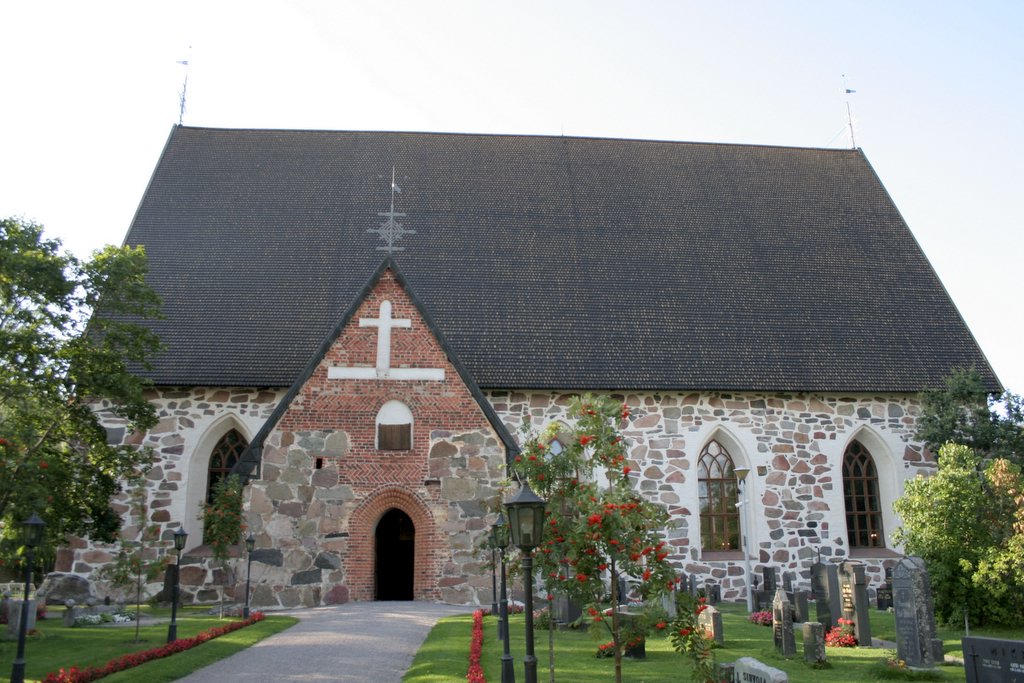

In the medieval stone churches where Gregorian chants were sung, the reverberation time (how long an echo lasts) was 6-8 seconds4 . This was exploited by monks and nuns to achieve deep, clean resonance when singing, instead of harsh, clashing sounds during reverberation. To accomplish this, Gregorian chants were made to be monophonic (they only had one line of melody), which meant that there were no overlapping harmonies that would create unpleasant dissonance during echoes. Consequently, rather than ruining the music, the reverberation added to the mystical atmosphere created by the chants.
My final point about the mathematical brilliance of these chants is about the rhythm. When you play the organ for traditional hymns and other forms of worship music, you have to follow strict time signatures like 3/4 or 4/4. In contrast, Gregorian chants use free rhythm (also called prose rhythm), which means that the rhythm follows the natural flow and accent of the Latin words. This prevents the music from becoming too mechanical, which makes it completely unique and different from accompanied forms of music.
12 Centuries of Unbroken Song
The genre that we know of today as Gregorian chant was first codified in the mid-8th century under the Carolingian Empire, making it the oldest continuously practiced Roman Catholic worship music. When it is sung or heard by the congregation, I believe it totally unites everyone, because it connects them directly to the traditions of the early Roman Catholic Church. Moreover, it was codified by Charlemagne (Emperor of the Carolingian Empire) so he could use it as a tool to unite Europe. It was quite literally made to unite people.
The 16th century Reformation tried to silence Gregorian chants by replacing them with vernacular hymns (hymns sung in the official language of that country instead of in Latin), but they failed. This wonderful, authentic, traditional, Roman Catholic worship music survived more than 12 centuries of wars, collapse of empires, religious changes and changes in music to the point of us being able to listen to it in the 21st century. That alone proves its liturgical power. For more details on how the Reformation damaged the Latin liturgy in Europe, visit my article on how The Reformation Was a Catastrophe.
Why Traditional Hymns and Other Forms of Music Fall Short
I will explain this in terms of the criteria I set earlier for Roman Catholic worship music:
. Elevate our minds towards God – most traditional hymns rely on an organ as the main instrument to accompany the lyrics. While it gives the song genuine beauty and emotion, it sometimes prioritises the wrong type of emotion. This type of emotion focuses on the sound of the accompanying music itself rather than the meaning and purpose of the lyrics. Consequently, your feelings are superficial and do not resonate with you for a long time. You become distracted from praising God. Of course I know that without the organ the song would just be lifeless, but that is what makes Gregorian chants so great. They manage to create profound emotion based on the lyrics themselves, without needing any instruments playing in the background (which could distract you from prayer).
I also want to briefly talk about the disaster that is contemporary worship music. Subgenres like Catholic rap completely focus on the performers themselves, who create songs about visions or events that never happened. Contemporary worship music is the most distracting genre you can listen to and quite frankly it shouldn’t be considered Catholic worship music.
. Unite all people in the congregation – most vernacular Catholic hymns originated in the Middle Ages. Therefore, they just don’t have as much connection to the traditions of the early church as Gregorian chants have, so they have less of a unifying impact between Catholics. This lack of an impact is further amplified by them being in modern languages instead of Latin, because Latin connects people to the Roman roots of the Church. Finally, Gregorian chants were born to create unity in Europe (as you know from earlier in the article), but traditional hymns were born out of division between European powers who wanted music in their own language. This contextual difference highlights the opposing effects of the two genres.
. Must be well-crafted and elegant – when looking at all Gregorian chants, you find that all eight modes (talked about earlier) are distributed across the chants. In contrast, almost all traditional hymns use only one of two keys (major keys or minor keys), with only a tiny fraction of modal anomalies. This shows how Gregorian chants consistently use a far wider and more complex range of emotional and atmospheric tools compared to traditional hymns, making them more intricate and profound. The difference between major keys and minor keys is binary (one is happy and one is sad), which does not capture the internal complexities of human emotion. Modes allow music to navigate through the grey areas of human psychology. The box below shows results from the statistical analyses of Liber Usualis (containing the Gregorian chant repertoire used by the Roman Catholic Church) that show how each mode is distributed across the repertoire:
. Musicologists studying all 2,333 chants in Liber Usualis found that all eight modes are distributed throughout the book, with about 22% of the repertoire using mode 1, 23% using mode 8, about 10% – 15% using modes 2, 3, 4 or 7, and roughly 5% using modes 5 and 6.5
Another point I want to mention is the rhythm. As I have mentioned before, traditional hymns use a strict time signature, such as 3/4 or 4/4. I believe this can make them slightly mechanical, repetitive or predictable, meaning you can lose interest in the music. The unique, free-flowing rhythm of a Gregorian chant helps to ensure that this doesn’t happen.
Conclusion
I know that just reading words on a screen won’t be enough to convince you of my point. That is why I urge you to listen to an Adoremus in aeternum or Salve regina yourself. You can easily listen to them online on Youtube or Spotify ( go to “The Music That Moves Your Soul” section of the article, where I have linked the chants mentioned to Youtube videos). Better Yet, you can listen to a professional choir at Latin Mass or at monasteries singing the chants live. Either way, make sure you appreciate the passion and profound emotion it gives you. Make sure you appreciate the connection it gives you to the roots of the Roman Catholic Church. Make sure you appreciate the mathematics behind the music. We must not lose this wonderful, traditional form of Roman Catholic worship music to the modern world.
I hope you enjoyed this article. If you have any questions or thoughts on the article, let me know by leaving a comment below.
References
1. Pius X. (1903). “Tra le Sollecitudini” On sacred music, Papal Encyclicals Online
2. Paul VI. (1963). “Sacrosanctum Concilium” The constitution on the sacred Liturgy, Vatican Official Website
3. Pius XII. (1955). “Musicae Sacrae Disciplina” The discipline of sacred music, The Holy See
4. Marta V. (1993). “Art as Integral Part of Architectural Space” Art integration in structural design, MIT DSpace PDF Link
5. David H. Joshua V. (2006) “A Cognitive Approach to Medieval Mode: Evidence for an Historical Antecedent to the Major/Minor System” Statistics on Gregorian chants, ResearchGate